
Description
MH Infrared Line Tracking Sensor Module
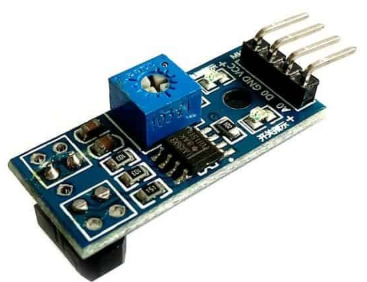
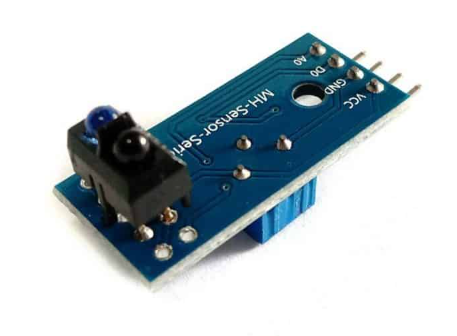
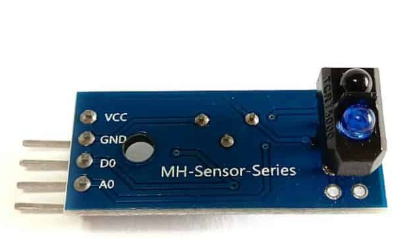
The MH Infrared Line Tracking Sensor Module is an electronic sensor designed to detect lines and surface variations using infrared light. It is commonly used in line-following robots, robotics projects, and automatic navigation systems.
The module works by transmitting infrared light toward a surface and detecting the reflected light. Different surface colours reflect infrared light differently. For example, a white surface generally reflects more infrared light, while a black line absorbs more light.
The sensor provides an output signal that can be read by compatible microcontrollers such as Arduino, ESP32, and other development boards. It is useful for building autonomous robots that follow predefined paths.
Key Features
- Infrared-based surface detection.
- Suitable for black-and-white line tracking.
- Compact and lightweight module.
- Designed for line-following robot applications.
- Compatible with Arduino and other microcontrollers.
- Simple interface for connecting to control boards.
- Useful for educational robotics and DIY projects.
Technical Specifications
| Specification | Details |
|---|---|
| Product Type | IR Line Tracking Sensor |
| Sensor Technology | Infrared Reflection |
| Detection Method | Reflected Infrared Light |
| Application | Line Detection and Tracking |
| Output Type | Depends on module version; commonly digital |
| Operating Voltage | Depends on module version; verify before powering |
| Detection Distance | Depends on sensor design and surface |
| Sensitivity Adjustment | Available on some versions |
| Output Indicator | Available on some versions |
| Connector | Depends on module version |
Working Principle
- The infrared LED emits infrared light toward the surface.
- The surface reflects some of the infrared light.
- The receiver detects the reflected infrared light.
- The module generates an output signal based on the detected reflection.
- A microcontroller reads the output and controls the robot’s movement.
Applications
- Line-following robots
- Autonomous mobile robots
- Robotics learning projects
- Path detection systems
- Educational electronics projects
- Automated guided vehicle prototypes
- Arduino and ESP32 robotics projects
Important Notes
- Detection performance depends on surface colour, material, lighting, and sensor distance.
- Adjust the sensor position and sensitivity where supported.
- Verify the module’s operating voltage and output logic level before connecting it to a microcontroller.
- ESP32 GPIO uses 3.3V logic; ensure the sensor output is compatible.
- This sensor is designed for reflective surface detection, not long-distance object detection.
Reviews
There are no reviews yet.