


Description
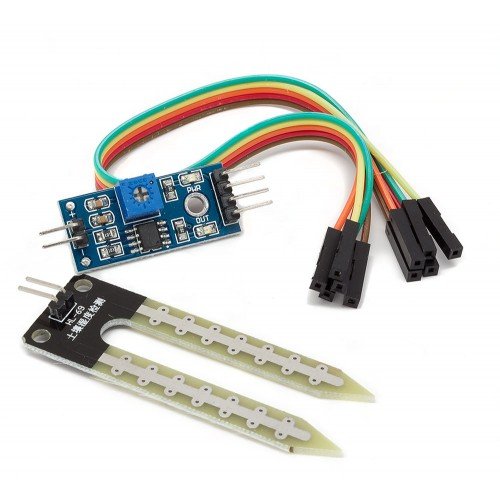
The Soil Moisture Sensor Module is an electronic sensor used to detect the moisture level in soil. It is suitable for plant monitoring, smart irrigation systems, gardening projects, and IoT-based agricultural applications.
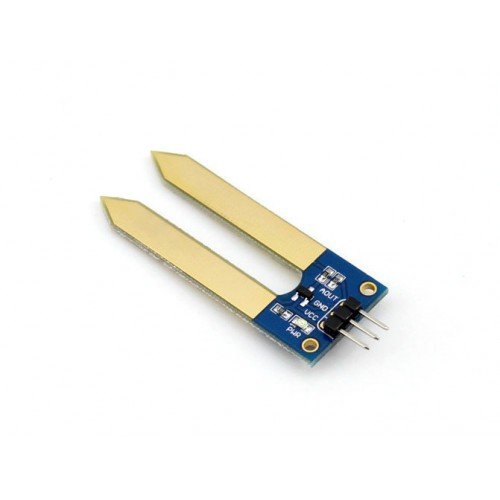
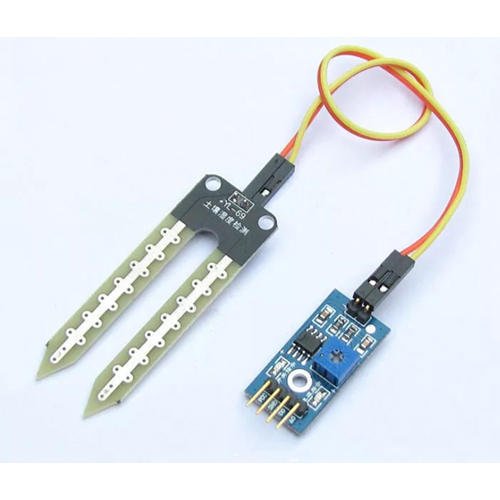
The sensor detects changes in the electrical properties of the soil and provides a signal that can be read by compatible microcontrollers. Depending on the module version, it may provide both analog and digital outputs, allowing users to monitor moisture readings or set a threshold for moisture detection.
This module is commonly used with Arduino, ESP32, and other compatible development boards to build automatic watering systems and soil monitoring projects.
Key Features
- Detects changes in soil moisture
- Suitable for plant and soil monitoring projects
- Compatible with Arduino and other supported microcontrollers
- Analog output for monitoring moisture-related readings on compatible versions
- Digital output with adjustable threshold on versions equipped with a comparator and potentiometer
- Useful for automatic irrigation and smart gardening
- Simple interface for electronics prototyping
Technical Specifications
| Specification | Details |
|---|---|
| Product Type | Soil Moisture Sensor Module |
| Detection Method | Electrical soil-moisture sensing |
| Output Type | Analog and/or digital, depending on version |
| Operating Voltage | Depends on module version; check the product label |
| Interface | Sensor output pins |
| Controller Compatibility | Arduino, ESP32, and other compatible boards |
| Sensitivity Adjustment | Available on some versions |
| Sensor Probe | Depends on the supplied model |
| Dimensions | Vary by version |
Applications
- Automatic plant watering systems
- Smart irrigation projects
- Soil moisture monitoring
- Gardening and greenhouse automation
- Arduino and ESP32 projects
- IoT-based agriculture systems
- Educational electronics and robotics projects
Installation and Usage Notes
- Insert the sensing probe into the soil according to the manufacturer’s instructions.
- Connect the power, ground, and output pins according to the module pin labels.
- Check the output voltage before connecting it to a microcontroller input.
- ESP32 GPIO pins are generally 3.3V logic; do not apply a 5V signal directly to an ESP32 input.
- Calibrate readings for the type of soil and moisture range being monitored.
- If the sensor uses exposed resistive metal tracks, prolonged continuous powering may cause corrosion. Consider powering it only when taking measurements.
- This sensor provides an indicative reading and may require calibration for reliable irrigation control.
Reviews
There are no reviews yet.