
Description
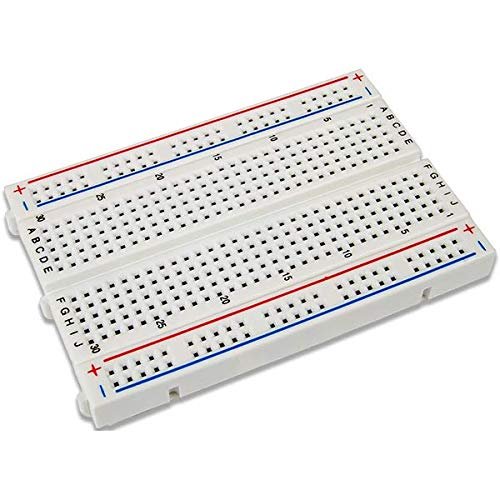
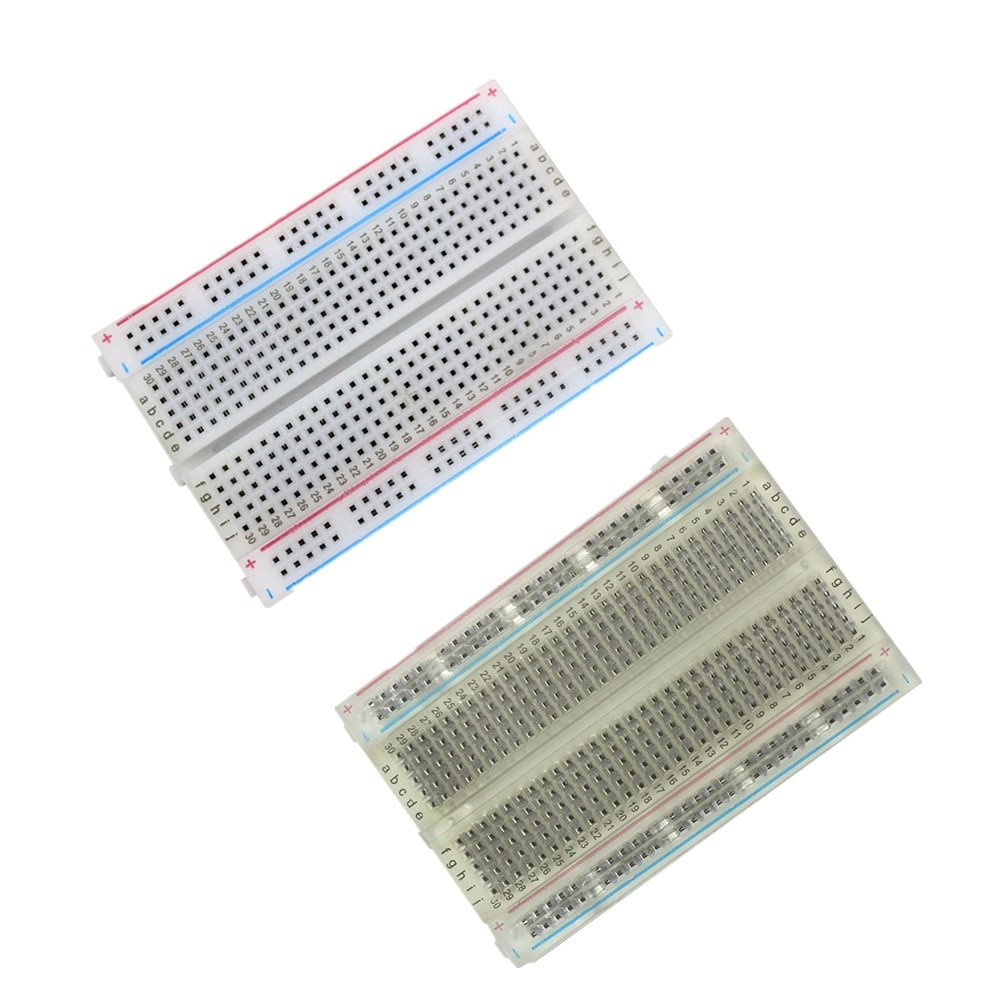
The Mini Breadboard 400 Points is a solderless prototyping board designed for building, testing, and modifying electronic circuits without soldering. It allows components and jumper wires to be connected quickly, making it suitable for electronics learning, circuit prototyping, and DIY projects.
With 400 connection points, this breadboard is useful for experimenting with sensors, resistors, LEDs, integrated circuits, and microcontroller boards such as Arduino, ESP32, and Raspberry Pi Pico. Components can be inserted and removed easily, allowing circuits to be changed during development.
Key Features
- 400 connection points for electronic circuit prototyping
- Solderless design for quick circuit assembly
- Reusable for repeated experiments and testing
- Suitable for jumper wires and compatible through-hole components
- Useful for educational electronics and DIY projects
- Supports prototyping with compatible microcontroller boards
- Compact design for workbenches and electronics projects
Technical Specifications
| Specification | Details |
|---|---|
| Product Type | Solderless Breadboard |
| Total Connection Points | 400 |
| Connection Method | Spring contacts |
| Soldering Required | No |
| Reusable | Yes |
| Compatible Components | Compatible through-hole components and jumper wires |
| Power Rails | Depends on the board layout |
| Board Dimensions | Vary by model |
| Colour | Depends on available version |
Applications
- Arduino and ESP32 prototyping
- Raspberry Pi Pico circuit experiments
- LED and resistor circuits
- Sensor testing
- Basic digital and analog electronics
- STEM education and laboratory experiments
- DIY electronics and circuit development
Usage Notes
- Check the breadboard’s internal connection layout before wiring a circuit.
- Use suitable jumper wires and component leads.
- Ensure the supply voltage and current are appropriate for the connected components.
- Do not connect power rails directly to each other or create short circuits.
- Breadboards are intended for low-voltage prototyping, not mains-voltage circuits or high-current applications.


Reviews
There are no reviews yet.